
THE VERDICT

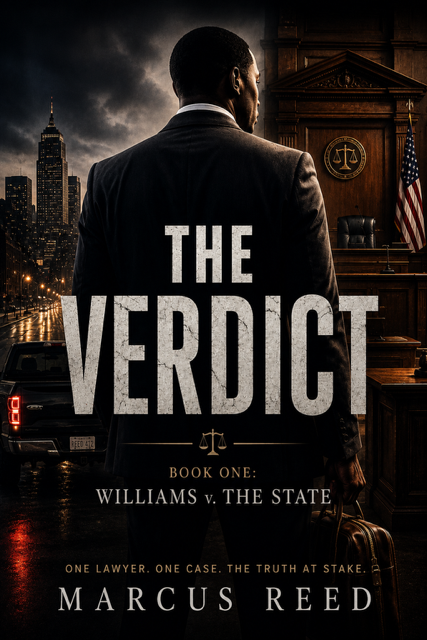
Book One: Williams v. The State
Part I — The Man Before the Case
At exactly 6:03 every morning, before the courthouse lights flickered on and before downtown Columbus filled with lawyers wearing thousand-dollar suits, a black Ford F-250 rumbled down High Street.
It wasn’t polished.
It wasn’t flashy.
It had scratches along the tailgate, dried mud around the wheel wells, and a fishing rod tucked neatly inside the truck bed.
People looked at it and assumed it belonged to a contractor.
Or a farmer.
Or maybe somebody delivering supplies.
Nobody expected the driver to be one of the most respected criminal defense attorneys in Ohio.
Marcus Reed preferred it that way.
He believed first impressions told him more about people than introductions ever could.
He parked in the same spot every morning, climbed out wearing polished brown cowboy boots beneath a tailored charcoal suit, grabbed his weathered leather briefcase, and locked the truck with a click that echoed across the nearly empty parking lot.
Across the street, Assistant Prosecutor Daniel Pierce stood at a courthouse window holding a paper cup of coffee.
“He’s here,” Pierce said.
A younger prosecutor beside him glanced outside.
“In that truck?”
Pierce nodded.
“I’ll never understand it.”
An older prosecutor overheard them and laughed without looking up from the file in his hands.
“You don’t have to understand it.”
The younger prosecutor turned.
“What matters is, if that truck pulls into the lot, cancel your lunch plans.”
“Why?”
The older man finally looked toward the window.
“Because Reed doesn’t lose quickly.”
Marcus never rushed.
He liked the courthouse before it became a courthouse.
Before the lawyers arrived with rolling briefcases and loud voices.
Before frightened families filled the benches.
Before deputies escorted handcuffed men and women through side doors while pretending not to hear their mothers crying.
Before judges took the bench and everyone began calling arguments facts.
At that hour, it was only a building.
Marble floors.
High ceilings.
Wooden doors.
Silence.
Marcus walked through the metal detector, nodded at the deputy behind the desk, and continued toward the elevators.
“Morning, Reed,” the deputy called.
“Morning, Carl.”
“You fishing this weekend?”
Marcus pressed the elevator button.
“If my sons let me.”
“They run the house?”
“They think they do.”
The deputy laughed.
Marcus stepped onto the elevator alone.
As the doors closed, he glanced at his reflection in the metal panel.
Forty-two years old.
Clean-shaven.
Close-cropped hair.
A face that rarely revealed what he was thinking.
People often mistook his calm for comfort.
They assumed he wasn’t nervous because he never looked nervous.
The truth was different.
Marcus felt everything.
Every doubt.
Every risk.
Every possibility of failure.
He had simply learned that fear was information.
You listened to it.
You respected it.
But you never allowed it to speak for you.
The elevator opened on the fourth floor.
Suite 412 sat at the end of a long hallway.
The gold lettering on the glass door read:
MARCUS REED
CRIMINAL DEFENSE
No list of victories.
No slogans.
No promises.
Marcus unlocked the door and entered.
His office looked nothing like the polished firms downtown.
There was no marble reception desk.
No abstract artwork.
No wall of awards.
Dark walnut bookshelves stretched from floor to ceiling, packed with casebooks, state statutes, trial transcripts, appellate decisions, and legal pads filled with his father’s handwriting.
Boxes sat beneath the windows.
Photographs of old courthouses lined one wall.
Framed verdict forms lined another.
Only one picture hung behind Marcus’s desk.
It showed a younger Marcus standing beside an older Black man in suspenders, a white shirt, and a dark tie.
The older man held a yellow legal pad.
Isaiah Reed.
Marcus’s father.
Beneath the photograph were three words.
EARN EVERY VERDICT.
Marcus looked at it every morning before sitting down.
Not because he needed motivation.
Because he remembered what it felt like never being good enough.
Isaiah Reed wasn’t simply respected.
He was studied.
Law professors assigned his closing arguments.
Judges quoted his appellate briefs.
Young defense attorneys watched old recordings of his cross-examinations the way basketball players studied Michael Jordan.
Over forty years, Isaiah had won cases most lawyers would have been afraid to touch.
Murder trials with no alternate suspect.
Drug conspiracies built around cooperating witnesses.
Public corruption cases in which everyone had already decided the defendant was guilty before jury selection began.
Isaiah never promised innocence.
He promised preparation.
Marcus remembered being nine years old and finding his father asleep on the office couch.
Legal pads covered the floor.
Coffee cups crowded the desk.
Books were stacked high enough to hide the window.
“Dad?”
Isaiah opened one eye.
“What time is it?”
“Mom said come home.”
Isaiah smiled.
“I will.”
He never did.
Marcus woke the next morning and found him still there.
At nine years old, Marcus believed his father loved work more than family.
At twenty-five, he believed Isaiah loved winning more than people.
At forty-two, he understood the truth.
Isaiah wasn’t addicted to victory.
He was terrified of losing someone else’s freedom because he had failed to prepare.
Marcus placed his briefcase beside his desk and removed a black fountain pen from his jacket.
It had belonged to Isaiah.
His father gave it to him the morning Marcus argued his first felony trial.
“Never write with a pen you don’t trust,” Isaiah had said.
Marcus had laughed.
“I’m serious,” Isaiah told him. “A lawyer should know exactly how everything in his hand is going to behave.”
Marcus still used that pen.
He clicked on his desk lamp, opened the Howard file, and began reviewing the testimony for the fourth time.
At 6:27, his phone buzzed.
MASON
His oldest son.
Marcus smiled before answering.
“You awake?” Mason asked.
“I’ve been awake for two hours.”
“You still coming tonight?”
Marcus leaned back in his chair.
“You know Fridays are ours.”
“You promise?”
“I’ve never broken that promise.”
Mason laughed.
“Micah said court might keep you.”
Marcus looked through the window toward the courthouse across the street.
“Court doesn’t get Fridays.”
“What about clients?”
“They don’t get them either.”
“What about Grandpa?”
Marcus smiled.
“Especially not Grandpa.”
From somewhere in the background, Micah shouted, “Ask him if he bringing wings!”
Marcus heard the youngest boy, Miles, yell something about pizza.
“One at a time,” Marcus said.
Mason laughed again.
“So you coming?”
“I’m coming.”
“Seven?”
“Seven.”
“Don’t wear a suit.”
Marcus looked down at himself.
“What’s wrong with my suits?”
“You dress like court everywhere.”
“I dress like a grown man.”
“You wear cowboy boots with dress pants.”
“Because I have taste.”
“Mom says it’s weird.”
“Your mother has questionable judgment.”
Mason laughed harder.
“I’m telling her you said that.”
“She already knows.”
The call ended.
Marcus stared at the family picture beside his computer.
Three sons.
Mason, fourteen.
Micah, eleven.
Miles, seven.
One woman.
Danielle Brooks.
The mother of all three boys.
They had been together for almost sixteen years without ever marrying and had been apart for nearly four.
People always expected some dramatic explanation.
There wasn’t one.
No betrayal.
No scandal.
No screaming match that shattered the family.
They had loved each other.
Then slowly, quietly, they had stopped knowing how.
Instead of forcing a relationship that had become resentment, they chose peace.
They shared holidays.
Attended school events together.
Sat on the same side at basketball games.
Argued sometimes.
Apologized when necessary.
Their sons never had to choose between parents.
Marcus didn’t call Danielle his ex.
He called her the mother of his children.
He believed the title deserved more respect.
At 7:10, the office door opened.
His assistant, Renee Carter, entered carrying two coffees and a bag from the bakery downstairs.
“You’re early,” Marcus said.
“You’ve said that every morning for seven years.”
“And every morning it’s true.”
Renee placed a coffee on his desk.
“No sugar. Splash of cream.”
“Thank you.”
She looked at the open file.
“You’re still on Howard?”
“Something is bothering me.”
“The video?”
“The bartender.”
“He says he saw the punch.”
“He says he saw everything.”
Renee removed her coat.
“And?”
“Nobody sees everything.”
Marcus turned another page.
“The more certain a witness sounds, the more interested I become in what they’re trying not to remember.”
Renee studied him.
“You already know what you’re going to ask.”
“I know what I want him to admit.”
“That he didn’t see the beginning?”
“That he decided what happened before the police arrived.”
Renee nodded toward the clock.
“You have two hours.”
Marcus lifted his coffee.
“That’s plenty of time.”
At 8:41, Marcus entered the courthouse again.
By then, the building had transformed.
Families crowded the benches.
Attorneys argued into phones.
Deputies called names over the noise.
Defendants stood beside mothers, girlfriends, brothers, and cousins who had been told to dress respectfully but had no idea what respectfully meant to a judge.
Marcus watched people.
He always watched people.
Fear revealed character.
Confidence sometimes hid panic.
Silence often carried guilt.
A young attorney hurried toward him.
“Mr. Reed?”
Marcus stopped.
“Yes?”
“I’m Tyler Benson.”
Marcus shook his hand.
“I’ve watched every trial of yours that’s online.”
Marcus smiled.
“I hope you learned what not to do.”
Tyler laughed nervously.
“I learned to slow down.”
“That’s a start.”
“Most attorneys in my class were taught to control the room.”
Marcus glanced around the crowded hallway.
“You can’t control a courtroom.”
Tyler looked confused.
“You can control yourself. Sometimes that’s enough.”
Before Tyler could answer, the hallway quieted.
Not completely.
Just enough for people to notice.
A wooden cane struck the marble floor.
Once.
Twice.
Then a deep voice called, “Marcus.”
Isaiah Reed moved through the courthouse as if the building remembered him.
Seventy-three years old.
Tall.
Broad-shouldered.
Gray beard trimmed close.
Dark navy suit.
White pocket square.
A wooden cane he rarely seemed to need.
Judges greeted him first.
Court officers smiled.
Older lawyers stood straighter.
Young lawyers whispered his name.
Even prosecutors nodded respectfully.
Isaiah stopped in front of Marcus.
“You reviewing the Howard file?”
“I was.”
“You missed something.”
Marcus frowned.
“I reviewed it four times.”
Isaiah reached inside his coat and handed him a folded opinion.
“Fourth District.”
Marcus opened it.
The decision had been issued the previous afternoon.
One paragraph changed the admissibility of a witness statement under circumstances nearly identical to Howard’s case.
Marcus looked up.
“When did you read this?”
“Five this morning.”
“You still trying to outwork everybody?”
Isaiah corrected him.
“I’m trying to outwork yesterday.”
Marcus read the paragraph again.
“This could keep the officer from repeating the bartender’s original statement.”
“It could.”
“The prosecutor probably hasn’t seen it.”
Isaiah’s eyes narrowed.
“Don’t assume your opponent is lazy because you hope he is.”
Marcus folded the opinion and placed it inside his file.
“You coming in?”
“I didn’t put on a suit to sit in the hallway.”
Isaiah began walking toward Courtroom 3B.
Tyler stared after him.
“Does he always do that?”
Marcus followed his father.
“Every chance he gets.”
Courtroom 3B filled quickly.
Today’s case wasn’t murder.
It wasn’t robbery.
It was aggravated assault involving a fight outside a downtown bar.
Simple.
On paper.
Marcus’s client, Anthony Howard, sat at the defense table with both hands locked together.
Thirty-six years old.
Married.
Two daughters.
No prior felony record.
The man he struck had suffered a fractured jaw and a concussion.
The prosecution said Anthony attacked without warning.
Anthony said the other man threatened him, shoved him, and reached inside his coat.
No weapon had been found.
The surveillance footage began too late.
It showed the punch.
Not what happened before it.
Assistant Prosecutor Daniel Pierce stood at the opposite table.
He was capable.
Prepared.
Not brilliant.
But smart enough to know that jurors trusted video.
The bartender was the State’s final witness.
He took the stand wearing a pressed blue shirt and an expression of complete confidence.
Pierce approached.
“Where were you working on the night of March fourteenth?”
“Murphy’s Tavern.”
“Did you see the defendant, Anthony Howard?”
“Yes.”
“Did you see the altercation?”
“I saw the whole thing.”
Pierce turned toward the jury.
“What happened?”
“Mr. Howard punched the other man for no reason.”
Anthony shifted beside Marcus.
Marcus placed one hand on his client’s wrist.
Still.
The bartender continued.
“They were arguing. Then Mr. Howard hit him.”
“Did the other man strike Mr. Howard first?”
“No.”
“Did he threaten him?”
“Not that I saw.”
“Did he reach for a weapon?”
“No.”
Pierce nodded.
“No further questions.”
Marcus didn’t stand immediately.
He wrote one sentence on his legal pad.
HE NEEDS TO BELIEVE HE IS RIGHT.
Then he capped the fountain pen.
“Mr. Reed?” the judge prompted.
Marcus rose.
“May I proceed, Your Honor?”
“You may.”
Marcus walked slowly toward the witness stand.
“You told the jury you saw the whole thing.”
“Yes.”
“You were working that night?”
“Yes.”
“Bartending?”
“Yes.”
“Busy?”
“A little.”
Marcus glanced toward the jury.
“It was a Friday night?”
“Yes.”
“Between ten and eleven?”
“Yes.”
“How many customers were inside?”
“Maybe sixty.”
“How many bartenders?”
“Two.”
“How many servers?”
“Three.”
“You were responsible for serving drinks?”
“Yes.”
“Taking payments?”
“Yes.”
“Watching the entrance?”
“Sometimes.”
“Checking on customers?”
“Yes.”
“Keeping an eye out for fights?”
“Yes.”
Marcus nodded.
“You had a lot to do.”
“I could handle it.”
“I’m sure you could.”
Pierce watched carefully.
Marcus continued.
“You told police there had been another argument near the pool tables shortly before Mr. Howard threw the punch.”
The bartender’s confidence shifted slightly.
“Yes.”
“You walked over there?”
“For a second.”
“To calm those men down?”
“Yes.”
“How long were you away from the bar?”
“Maybe fifteen seconds.”
Marcus picked up the police report.
“In your statement, you said twenty to thirty seconds.”
“I don’t remember exactly.”
“That’s fair.”
Marcus closed the report.
“During those twenty to thirty seconds, you weren’t watching my client.”
“No.”
“You couldn’t hear what was being said between him and the other man.”
“No.”
“You couldn’t see whether the other man pushed him.”
“No.”
“You couldn’t see whether he threatened him.”
“No.”
“You couldn’t see whether he reached inside his coat.”
“No.”
Marcus stopped.
The courtroom was silent.
The bartender glanced at Pierce.
Marcus waited until the witness looked back at him.
“When you returned, what did you actually see?”
“The punch.”
“One punch?”
“Yes.”
“And everything before that?”
The bartender hesitated.
“I didn’t see.”
Marcus nodded.
“So when you told this jury you saw the whole thing…”
Pierce stood.
“Objection. Argumentative.”
“Sustained,” the judge said.
Marcus didn’t react.
He simply changed the question.
“Your statement that Mr. Howard punched him for no reason was an assumption, wasn’t it?”
“No.”
“What reason did you hear?”
“I didn’t hear one.”
“What threat did you hear?”
“I didn’t hear one.”
“What physical contact did you see before the punch?”
“I didn’t see any.”
“So you don’t know what happened before the punch.”
The bartender’s jaw tightened.
“I know what I saw.”
Marcus stepped closer.
“You saw the ending.”
The witness said nothing.
“You did not see the beginning.”
Silence.
Marcus waited.
Jurors leaned forward.
Finally, the bartender looked down.
“No.”
Marcus nodded.
“No further questions.”
He returned to the defense table.
Anthony whispered, “That’s it?”
Marcus looked straight ahead.
“That’s enough.”
Isaiah sat in the back row.
He didn’t smile because Marcus had embarrassed the witness.
Marcus hadn’t.
That was the point.
Years earlier, Isaiah had taught him the hardest lesson in cross-examination.
Never destroy a witness unless destruction is necessary.
Jurors forgive mistakes.
They understand confusion.
They recognize arrogance.
But if a lawyer humiliates an ordinary person, the jury may begin protecting the witness instead of listening to the truth.
A good cross-examination did not always end with a confession.
Sometimes it ended with a smaller sentence.
I didn’t see.
Closing arguments began after lunch.
Pierce stood before the jury and pointed to the paused surveillance video.
“You can see the defendant strike the victim. You can see the force. You can see the result.”
He spoke for twenty-seven minutes.
He discussed the injury.
The hospital photographs.
Anthony’s size.
The violence of the punch.
When Pierce finished, Marcus remained seated for several seconds.
Then he stood with no notes in his hand.
He walked toward the jury.
“The State showed you a punch.”
He paused.
“They did not show you a crime.”
Pierce shifted at the prosecution table.
Marcus continued.
“The law does not ask whether Anthony Howard threw that punch. He did. We told you that on the first day.”
Several jurors nodded.
“The question is why.”
Marcus turned toward the frozen video.
“This camera recorded seven seconds.”
He looked back at the jury.
“Seven seconds out of an entire night.”
“The State wants those seven seconds to become the whole story because those are the only seven seconds that help them.”
He moved slowly.
“The bartender was honest by the end of his testimony. He did not see the threat. He did not see the shove. He did not see the hand move inside the coat. He saw the ending.”
Marcus glanced toward Anthony.
“A verdict cannot be based only on the ending.”
He returned his attention to the jury.
“If I showed you a man running and refused to show you what was chasing him, would you call him guilty for being afraid?”
No one moved.
“If I showed you a woman screaming and refused to let you hear what had been said to her, would you call her irrational?”
Marcus shook his head.
“You would ask what happened first.”
He pointed gently toward the State’s table.
“The prosecution has the burden to prove beyond a reasonable doubt that Anthony Howard was not defending himself.”
“They cannot do that by hiding behind seven seconds.”
His voice stayed calm.
“No one is asking you to approve of violence.”
“No one is asking you to pretend a man wasn’t injured.”
“We are asking you to follow the law, even when the ending is ugly.”
Marcus returned to the defense table.
“The State proved there was a punch.”
He sat down.
“They did not prove there was a crime.”
The jury deliberated for two hours and seventeen minutes.
Anthony paced in a small conference room while Marcus sat at the table reviewing another file.
“How can you read right now?” Anthony asked.
“Because worrying won’t change their answer.”
“You think we won?”
“I think we gave them a reason to think.”
“That ain’t what I asked.”
Marcus closed the file.
“No lawyer who respects a jury tells a client he knows what twelve strangers will do.”
Anthony sat across from him.
“What happens if they find me guilty?”
“We keep fighting.”
“And if they don’t?”
“You go home.”
Anthony lowered his head.
“I should’ve walked away.”
Marcus studied him.
“Maybe.”
“You think I was wrong?”
“I think you’re paying me for legal advice, not forgiveness.”
Anthony looked up.
Marcus softened.
“You can regret something and still have had the right to protect yourself.”
A deputy opened the door.
“They’ve got a verdict.”
The courtroom filled again.
Anthony stood beside Marcus.
His hands shook so badly that Marcus could see the sleeves of his jacket moving.
The clerk took the verdict form from the foreperson.
“On the charge of aggravated assault, we the jury find the defendant…”
Anthony stopped breathing.
“…not guilty.”
A sound escaped him somewhere between a sob and a gasp.
His wife covered her mouth.
One of his daughters began crying.
Marcus remained still.
He placed a hand on Anthony’s shoulder.
“Go hug your family.”
Anthony turned.
“Thank you.”
Marcus nodded.
“Go home.”
Outside the courtroom, reporters waited.
“Mr. Reed, do you believe justice was served?”
Marcus kept walking.
“The jury followed the law.”
“Do you have a statement about the prosecution?”
“The verdict is the statement.”
“Mr. Reed, is it true your father helped prepare the case?”
Marcus stopped.
Isaiah stood several feet behind him.
Marcus looked toward the reporter.
“My father helps every lawyer in Ohio whether they know it or not.”
Isaiah raised one eyebrow.
Marcus continued walking.
Inside the elevator, Isaiah pressed the button for the first floor.
“You talked too long,” he said.
Marcus laughed.
“Twenty-two minutes.”
“Could’ve done it in twelve.”
“The jury stayed with me.”
“That doesn’t mean every word helped.”
Marcus leaned against the elevator wall.
“You liked the opening.”
“I liked eight words.”
“Which eight?”
Isaiah looked straight ahead.
“The State showed you a punch, not a crime.”
Marcus nodded.
“That was nine.”
Isaiah turned slowly.
“Then you already wasted one.”
The elevator doors opened.
Marcus laughed as they walked into the lobby.
Outside, rain had begun falling over downtown Columbus.
Marcus and Isaiah stood beneath the courthouse awning.
“You coming tonight?” Marcus asked.
“Where?”
“The boys are at Danielle’s. Wings, pizza, probably too much noise.”
Isaiah adjusted his coat.
“Your mother wants dinner.”
“Bring her.”
“She doesn’t like your house.”
“She says my furniture is depressing.”
“She’s right.”
Marcus looked toward the parking garage.
“You sitting in court for Howard surprised me.”
“I was nearby.”
“You drove forty minutes to be nearby?”
Isaiah ignored the question.
“You did well.”
Marcus looked at him.
The rain struck the pavement harder.
Isaiah did not offer praise often.
When Marcus graduated from law school, Isaiah shook his hand and said, “Good.”
When Marcus passed the bar, he said, “Expected.”
When Marcus won his first felony trial, Isaiah watched the recording and said, “You would’ve lost if the prosecutor wasn’t lazy.”
So Marcus waited, unsure whether he had heard correctly.
Isaiah continued.
“You were patient. You let the witness give you the answer.”
Marcus nodded once.
“Thank you.”
“Don’t enjoy it too long.”
“There it is.”
Isaiah smiled.
Then his expression changed.
“Your next case will not care what happened today.”
Marcus glanced at him.
“I don’t have a next case yet.”
“You always have a next case.”
Isaiah stepped into the rain and walked toward a dark Lincoln sedan parked at the curb.
Marcus watched him leave.
He didn’t know it then, but those words would return to him before the day was over.
At 4:48, Marcus entered the parking garage.
He loosened his tie and checked the time.
If traffic cooperated, he could stop at home, change clothes, pick up the wings, and arrive at Danielle’s before seven.
For once, no client was waiting.
No motion needed filing.
No judge had ordered him back the next morning.
Friday belonged to his sons.
His phone rang.
Unknown number.
Marcus stared at the screen.
He almost ignored it.
Almost.
Then something in him answered.
“Marcus Reed.”
Silence.
He stopped beside the truck.
“Hello?”
A woman inhaled shakily.
“Mr. Reed?”
“Yes.”
“I’m sorry. I know it’s late.”
“It’s not late.”
“I didn’t know who else to call.”
Marcus unlocked the truck but didn’t open the door.
“What happened?”
“My brother.”
Her voice cracked.
“They arrested him this morning.”
Marcus looked at the concrete wall across from him.
“What are they charging him with?”
The woman began crying quietly.
He waited.
“Attempted murder.”
Marcus’s hand tightened around the phone.
“Your name?”
“Danielle Williams.”
For half a second, the name caught him.
Danielle.
The same as the mother of his children.
He pushed the thought aside.
“Your brother’s name?”
“Terrence Williams.”
“How old is he?”
“Twenty-eight.”
“Where is he being held?”
“Franklin County.”
“Who was shot?”
“A man named Leon Carter.”
“Does your brother know him?”
“Yes.”
“How?”
“They worked together.”
“Did your brother shoot him?”
Silence.
Marcus waited again.
“I don’t know,” she said finally.
The honesty surprised him.
Most families called lawyers with certainty.
He didn’t do it.
He would never.
The police are lying.
The witness is lying.
Everybody is lying except the person in jail.
Danielle Williams sounded different.
She sounded afraid of the answer.
“When was the last time you spoke to your brother?” Marcus asked.
“Last night.”
“What did he say?”
“That he was in trouble.”
“What kind of trouble?”
“He wouldn’t tell me.”
“Did he ask for money?”
“No.”
“Did he ask you to hide anything?”
“No.”
“Did he mention Leon Carter?”
Another pause.
“Yes.”
Marcus reached through the open truck window and grabbed a yellow legal pad from the passenger seat.
“What did he say?”
“He said Leon was going to ruin everything.”
Marcus uncapped his fountain pen.
“Everything meaning what?”
“I don’t know.”
“Did you ask?”
“Yes.”
“What did Terrence say?”
“He told me not to worry about it.”
Marcus wrote the sentence down.
LEON WAS GOING TO RUIN EVERYTHING.
“Where did the shooting happen?”
“At a warehouse near the south side.”
“What kind of warehouse?”
“I don’t know. Terrence works construction. Maybe it was connected to a job.”
“Was anyone else there?”
“The police say there was a witness.”
“Who?”
“They won’t tell me.”
“What time was your brother arrested?”
“About eight this morning.”
“Has he spoken to detectives?”
“I don’t know.”
“Did you tell him not to?”
“I couldn’t reach him.”
Marcus looked at the clock on his dashboard.
4:54.
He had been six minutes away from leaving work behind.
“Mr. Reed,” Danielle said, “I know people probably call you every day asking you to save somebody.”
Marcus said nothing.
“My brother isn’t perfect.”
Still, Marcus waited.
“He’s made mistakes. He gets angry. He thinks he can fix everything himself. But he’s not a killer.”
“You said attempted murder.”
“You know what I mean.”
“I need you to be exact with me.”
She took a breath.
“I don’t believe he shot that man.”
“Belief isn’t evidence.”
“I know.”
“Do you?”
Her voice became quieter.
“No.”
Marcus closed his eyes.
That answer stayed with him.
She wasn’t selling him innocence.
She was asking him to find the truth.
“Has Terrence hired anyone?”
“No.”
“Public defender appointed?”
“Not yet.”
“Do you know his booking number?”
She read it to him.
Marcus wrote it down.
“What do you need from me?” she asked.
“Right now? Nothing.”
“Will you take the case?”
“I haven’t met your brother.”
“I can pay you.”
“I didn’t ask about money.”
“I know, but—”
“Ms. Williams.”
She stopped.
“I don’t accept clients through relatives. I meet the person whose freedom is at stake. I listen. Then I decide whether I can help.”
“When can you see him?”
Marcus looked at the rain beyond the garage entrance.
He thought about Mason asking if he promised.
Wings.
Pizza.
Three boys who had learned to measure their father’s love by whether he arrived when he said he would.
“Tomorrow morning,” Marcus said.
“Please.”
“I’ll see him tomorrow.”
“They said he may be arraigned early.”
“I’ll know before they do.”
“Thank you.”
“I haven’t done anything yet.”
“You answered.”
Marcus glanced toward the courthouse.
“Tell no one else what your brother said about Leon.”
“Why?”
“Because you don’t know who is listening.”
The line went quiet.
Then Danielle whispered, “Okay.”
Marcus ended the call.
For several seconds, he stood beside the truck listening to rain strike concrete.
Then he placed the yellow legal pad on the hood.
Across the top, he wrote:
THE STATE OF OHIO
v.
TERRENCE WILLIAMS
He stared at the words.
Every case began the same way.
A name.
A charge.
A version of events written by people with badges, authority, and time to tell their story first.
The public called it a case.
The defendant called it life.
Marcus wrote beneath the title:
Leon Carter was going to ruin everything.
Then another line:
Who benefits if Williams loses?
He stopped.
That question wasn’t his.
It belonged to Isaiah.
Years earlier, Marcus had brought his father a fraud case involving a businessman accused of stealing from investors.
Marcus spent an hour explaining bank records, contracts, and witness statements.
Isaiah listened without interrupting.
Then he asked, “Who benefits if your client loses?”
Marcus had been irritated.
“The victims.”
“No.”
“The State.”
“No.”
“Then who?”
Isaiah leaned back.
“The person you haven’t looked at yet.”
Marcus closed the notebook and placed it inside his briefcase.
His phone buzzed.
A text from Mason.
You still coming?
Marcus stared at it.
Then typed:
Leaving now. Pick the pizza.
He put the phone away.
The case could wait until morning.
His sons could not.
At 7:06, Marcus walked into Danielle Brooks’s house wearing jeans, a gray sweatshirt, and the same cowboy boots.
Mason looked at the clock.
“Six minutes late.”
“Traffic.”
“You’re always saying excuses don’t matter.”
Marcus handed him two pizza boxes.
“Then I brought evidence.”
Micah grabbed the wings.
Miles wrapped both arms around Marcus’s waist.
“You won?”
Marcus looked down.
“How do you know I had court?”
“Grandpa told Mom.”
Marcus glanced toward the kitchen.
Danielle Brooks stood near the counter with her arms folded.
“Your father called to critique your closing argument.”
Marcus shook his head.
“To you?”
“He said you used too many words.”
“He told me the same thing.”
“He also said you did well.”
Marcus looked surprised.
Danielle smiled.
“That part he told me not to repeat.”
The boys carried the food toward the living room.
Danielle lowered her voice.
“You okay?”
“Why?”
“You have the face.”
“What face?”
“The one where your body is here and your mind is somewhere with a file.”
Marcus glanced toward his sons.
“A woman called.”
“About a case?”
“Her brother was arrested.”
Danielle watched him.
“Serious?”
“Attempted murder.”
“And you’re thinking about taking it.”
“I’m thinking about meeting him.”
She nodded slowly.
“Tomorrow?”
“Yes.”
“Not tonight?”
Marcus looked at her.
“Court doesn’t get Fridays.”
Danielle’s expression softened.
“No. It doesn’t.”
For the next three hours, Marcus was not Marcus Reed, criminal defense attorney.
He was Dad.
He lost at a basketball video game because Micah refused to pass.
He helped Miles build a courthouse out of plastic blocks.
He argued with Mason about whether a jump shot in the driveway counted if one foot touched the grass.
At ten-thirty, the boys fell asleep across the living room.
Marcus sat alone on the back porch holding a glass of water.
Danielle joined him.
“You ever wish you did something else?” she asked.
“Every time I lose.”
“And when you win?”
“I remember why I didn’t.”
She leaned against the railing.
“You look tired.”
“I am.”
“Your father still pushing you?”
“He’ll push until one of us dies.”
“Probably after.”
Marcus smiled.
Danielle looked through the window at their sons.
“You know they’re proud of you.”
“I know.”
“They also worry every case is more important than them.”
Marcus’s smile disappeared.
“I came tonight.”
“You did.”
“I always come.”
“You do.”
She turned toward him.
“But children don’t measure love by your record. They measure it every time the phone rings and you look at the screen.”
Marcus looked down at his phone on the table.
The screen was dark.
“I answered one call today.”
“And now you’re on this porch thinking about a man you haven’t met.”
Marcus didn’t deny it.
Danielle touched his shoulder.
“I’m not criticizing you.”
“It feels like it.”
“I’m reminding you that being good at saving strangers doesn’t excuse you from showing up for the people who know your real name.”
She went back inside.
Marcus remained on the porch.
At 11:18, his phone rang.
Isaiah.
Marcus answered quietly.
“You awake?” Isaiah asked.
“It’s eleven.”
“That wasn’t my question.”
Marcus looked through the window.
“What do you want?”
“You got a new case.”
Marcus sat straighter.
“How do you know?”
“The courthouse talks.”
“I received the call six hours ago.”
“The jail talks faster.”
Marcus frowned.
“What have you heard?”
“Terrence Williams. Twenty-eight. Construction foreman. Attempted murder. Victim in critical condition. One eyewitness. Weapon recovered.”
Marcus stood.
“Recovered where?”
“Inside Williams’s truck.”
The porch suddenly felt colder.
“What kind?”
“Nine-millimeter.”
“Registered to him?”
“Yes.”
Marcus stared into the darkness.
“Anything else?”
Isaiah waited.
That pause told Marcus there was more.
“What?”
“The witness identified him.”
“Who is the witness?”
“Name hasn’t reached me yet.”
“Then how do you know there is one?”
“I know who to ask.”
Marcus paced slowly.
“Victim able to speak?”
“Not yet.”
“Surveillance?”
“Police believe so.”
“Believe or have?”
“I said believe.”
Marcus stopped.
The case already sounded stronger than the woman on the phone understood.
Motive.
Gun.
Eyewitness.
Possible video.
“What did the sister tell you?” Isaiah asked.
Marcus looked toward the living room.
“Attorney-client privilege doesn’t apply to a sister calling for information.”
“That wasn’t my question.”
“She said Terrence told her the victim was going to ruin everything.”
Isaiah became silent.
Marcus knew his father was no longer casually listening.
“What does everything mean?” Isaiah asked.
“She doesn’t know.”
“People always know more than they think.”
“I’ll talk to Williams tomorrow.”
“Don’t ask him if he did it.”
Marcus frowned.
“I know how to interview a client.”
“Then you know innocent people answer that question badly and guilty people practice it.”
Marcus leaned against the railing.
“What would you ask?”
Isaiah’s voice lowered.
“I’d ask him what the State cannot prove.”
Marcus said nothing.
It was a question Isaiah had used for decades.
Not “Are you innocent?”
Not “What happened?”
Not “Why did they arrest you?”
What can’t they prove?
It forced a defendant to reveal how he thought.
An innocent man usually discussed facts.
A guilty man often discussed weaknesses.
A frightened man discussed punishment.
A liar discussed everybody else.
“Go to sleep,” Isaiah said.
“You called me.”
“And now I’m telling you to sleep.”
The line went dead.
Marcus looked at the time.
Then he opened the notes app on his phone and typed:
Gun in truck. Registered to Williams. Eyewitness. Possible surveillance.


Comments